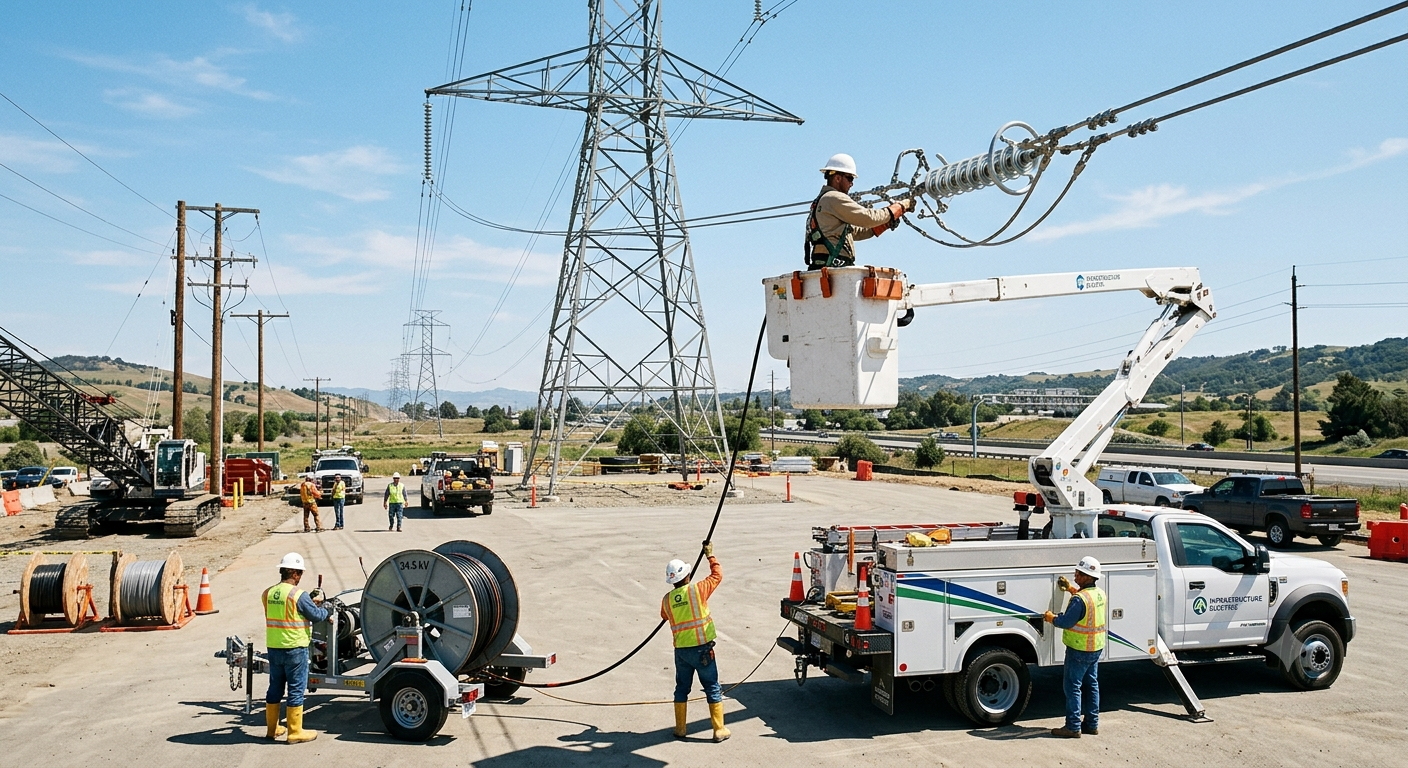
Why Quality Electrical Infrastructure Is Essential for Smart Manufacturing
The global shift toward Industry 4.0 is transforming traditional factories into highly automated, data-driven ecosystems (Kalsoom et al., 2021). Driven by the Industrial Internet of Things (IIoT), artificial intelligence, and real-time cloud analytics, modern production lines require flawless execution, microsecond synchronization, and zero unexpected downtime (Noor-A-Rahim et al., 2022).
However, many industrial facilities overlook a critical bottleneck: the physical power network. Advanced automation, robotics, and cyber-physical production systems (CPPS) are only as reliable as the electrical grid powering them (Al Shahrani et al., 2022). For industrial units looking to scale, partnering with an experienced HT LT electrical contractor in indore omkar enterprises is a fundamental prerequisite for smart manufacturing success. Without a resilient high-tension (HT) and low-tension (LT) framework, the advanced digital systems driving modern production cannot operate efficiently.
The Cost of Poor Power Quality in Smart Ecosystems
In a conventional manufacturing plant, a brief voltage dip might cause a minor flicker in the lighting or a temporary stall in a robust mechanical motor. In a smart factory, that same microsecond voltage fluctuation can cause catastrophic system failures.
Modern smart facilities rely heavily on sensitive electronic components, including:
- Programmable Logic Controllers (PLCs)
- Distributed Control Systems (DCS)
- Variable Frequency Drives (VFDs)
- Advanced robotic arms and edge-computing sensors
These digital systems require a clean, continuous, and highly stable power supply (Devi, 2025). High-frequency switching devices can introduce harmonic distortion back into the factory's grid, leading to overheating, data corruption, and premature equipment wear. Sudden voltage surges or sags can trigger automated safety protocols, shutting down entire production lines and causing expensive restarts, ruined material batches, and extensive operational delays (Bakuei, 2019). Partnering with a specialized infrastructure electrical contractor in indore omkar enterprises ensures that robust power-conditioning equipment, structured cabling, and harmonic filters are integrated directly into the facility's master electrical design.
Balancing High-Tension (HT) and Low-Tension (LT) Systems
Smart manufacturing requires a seamless, multi-tiered power distribution framework capable of safely managing heavy industrial loads while providing ultra-stable power to sensitive digital equipment.
[Main Utility Grid] ---> [HT Substation / Transformers (11kV/33kV)] | v [Internal Sub-Stations] ---> [LT Distribution Boards (415V/230V)] | +------------------------------+------------------------------+ | | | v v v [Heavy Industrial Machinery] [Robotic Automation Units] [Smart Sensor Arrays & IoT]
A resilient internal power grid relies on a precise balance between two critical subsystems:
1. High-Tension (HT) Infrastructure
The high-tension network manages incoming bulk power from the main utility grid, typically at voltages of 11kV or 33kV. Designing and maintaining an efficient HT setup—including pole-mounted transformers, outdoor substations, vacuum circuit breakers (VCBs), and robust protective relaying—requires specialized engineering expertise. This infrastructure steps down high utility voltage safely while absorbing large-scale external grid fluctuations before they reach the factory floor.
2. Low-Tension (LT) Distribution
Once power is stepped down to safer operational voltages (such as 415V three-phase or 230V single-phase), the LT network takes over. This system routes power through specialized Main LT Distribution Boards, Sub-Distribution Boards, and Motor Control Centers (MCCs). In a smart factory, the LT system must be configured to isolate highly sensitive automated control systems from heavy, noisy loads like large industrial compressors, preventing electrical noise from disrupting digital signals.
Smart Energy Management and Sustainability
A major objective of transitioning to smart manufacturing is reducing the facility's carbon footprint through optimized resource utilization (Sufian et al., 2025). Smart factories utilize IIoT-enabled energy meters and predictive analytics to monitor power consumption patterns in real time across individual production cells (Shadravan & Parsaei, 2023).
Real-World Impact: Implementing real-world smart factory roadmaps with continuous power analytics can reduce Scope 2 operational emissions by up to 50%, driven primarily by optimized power consumption management and waste reduction (Sufian et al., 2025).
A modern electrical contractor installs the intelligent distribution boards and communication pathways required to collect this data. By identifying idle machinery, optimizing peak demand cycles, and correcting low power factors, industrial enterprises can lower their utility costs while moving closer to corporate net-zero carbon goals (Onu et al., 2023).
Secure and Reliable Peripheral Infrastructure
An optimized smart facility requires reliable electrical systems that extend beyond the primary manufacturing floor. Safe, well-lit transport lanes and secure physical perimeters are essential for keeping logistics and round-the-clock shift changes operating efficiently.
| Infrastructure Component | Smart Factory Function | Operational Benefit |
|---|---|---|
| High-Efficiency LED High-Masts | Illuminates large loading docks and shipping bays. | Accelerates nighttime raw material intake and finished goods dispatch. |
| Intelligent Perimeter Lighting | Integrates with AI-powered CCTV cameras and security sensors. | Minimizes blind spots and deters unauthorized access to high-value assets. |
| Automated Solar Street Lighting | Powers access roads and employee parking zones independently. | Lowers overall facility grid load and provides fallback illumination during blackouts. |
Securing the outer boundaries of an industrial complex requires heavy-duty external power distribution and structural lighting layouts. Working closely with an experienced highway lighting contractor in india, omkar enterprises ensures that access roads and logistics corridors feature reliable, code-compliant outdoor illumination capable of withstanding extreme weather conditions. Furthermore, choosing an established street light contractor in indore helps local manufacturing units source durable, energy-efficient public and industrial outdoor lighting equipment built to withstand regional environmental challenges.
Building a Scalable Foundation for Your Smart Factory
Transitioning to smart manufacturing is an ongoing, step-by-step evolution rather than an overnight upgrade (Bakuei, 2019). As an enterprise introduces new automated assembly lines, collaborative robots (cobots), or additive manufacturing hubs, its power requirements naturally change.
An unoptimized, rigid electrical layout cannot scale to support these technological advancements. A forward-thinking industrial electrical design utilizes modular distribution architecture, scalable busbar trunking systems, and built-in capacity reserves. This proactive design allows manufacturers to quickly integrate new machinery and reconfigure production layouts without requiring expensive, time-consuming overhauls of the primary sub-stations.
By investing in high-quality electrical engineering from the start, industrial operations protect their expensive automation investments, eliminate costly unexpected downtime, and build a scalable framework ready to leverage tomorrow's industrial innovations.